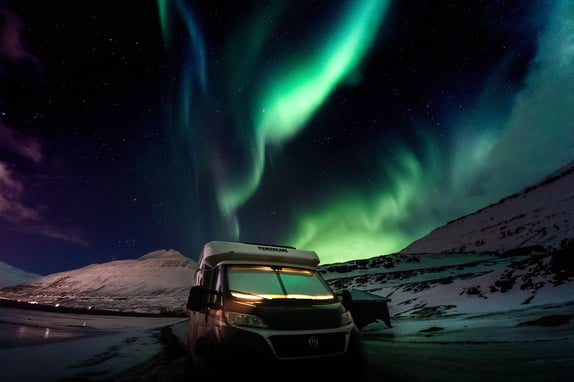
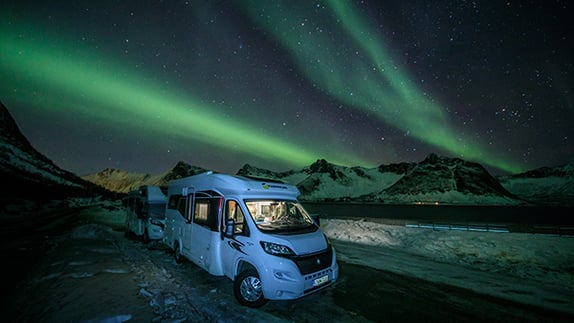
The best time to visit Iceland depends on what you want to see, because every season has its own magic. Iceland in summer means the midnight sun and open roads around the whole island. Winter brings the northern lights and blue ice caves, while spring and autumn reward you with quieter roads and better prices.
This guide breaks down when to visit Iceland by campervan, season by season. You'll find daylight hours, typical weather, what's open on the road and how prices change through the year. Pick your season, then check motorhome availability from our Keflavik station.
Iceland by season at a glance
Summer gives you the most daylight and the most open roads, while autumn and spring give you the best balance of price, crowds and scenery. Winter is for travellers who put the aurora first.
- Summer (Jun–Aug): Mild weather, the midnight sun and open roads all around the island, from the Ring Road to the highlands. It’s also peak season, so book early.
- Autumn (Sep–Oct): The northern lights return as the landscape turns red and gold. Days grow cooler and more changeable, but the crowds thin out.
- Winter (Nov–Mar): The best season for the northern lights, with snowy landscapes, blue ice caves and steaming hot springs. Days are short, but prices are often at their lowest.
- Spring (Apr–May): The light returns fast, waterfalls roar with meltwater and puffins arrive on the cliffs. It’s crisp but bright, with quiet roads before the summer rush.
Iceland’s weather can change within hours in any season, so always check road.is and vedur.is before you drive.
Iceland in summer (June–August): midnight sun and open roads
Iceland in summer is the easiest season for a campervan trip, and one of the most magical: endless golden days, the mildest weather of the year and the whole Ring Road at your wheels. It's also the busiest and most expensive time, so book early to get the best prices, your preferred dates and the widest choice of motorhomes.
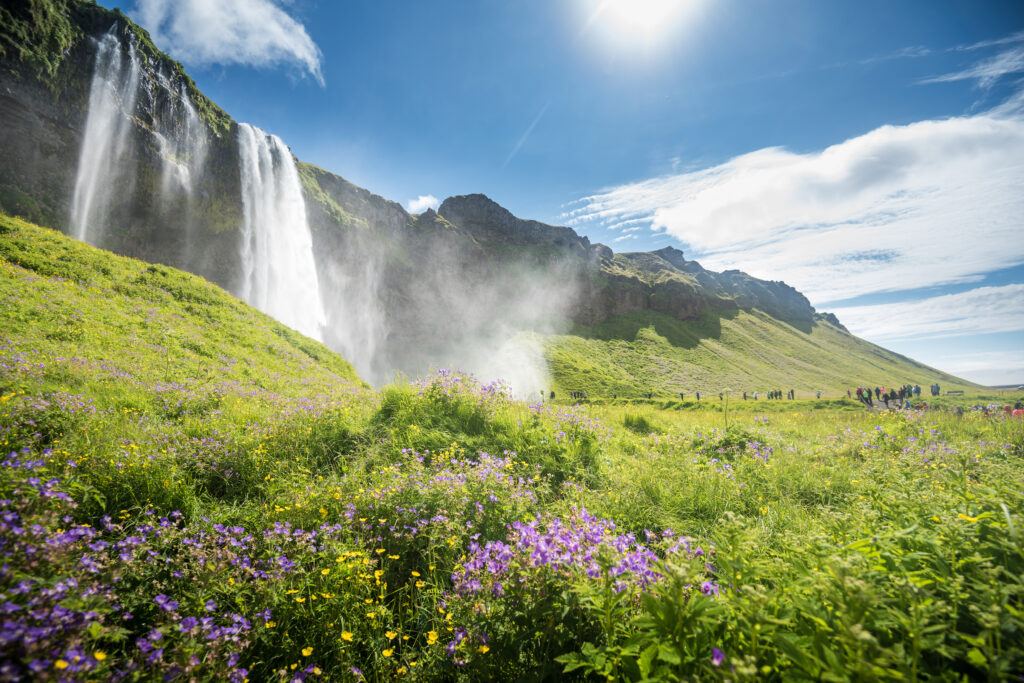
The Iceland midnight sun
Around midsummer the sun barely sets. Golden evening light melts straight into sunrise, and the sky never turns properly dark.
In a motorhome, you soak it all in at your own pace. Drive when the light is perfect, stop wherever the view takes you, and close the blinds when it's time to sleep.
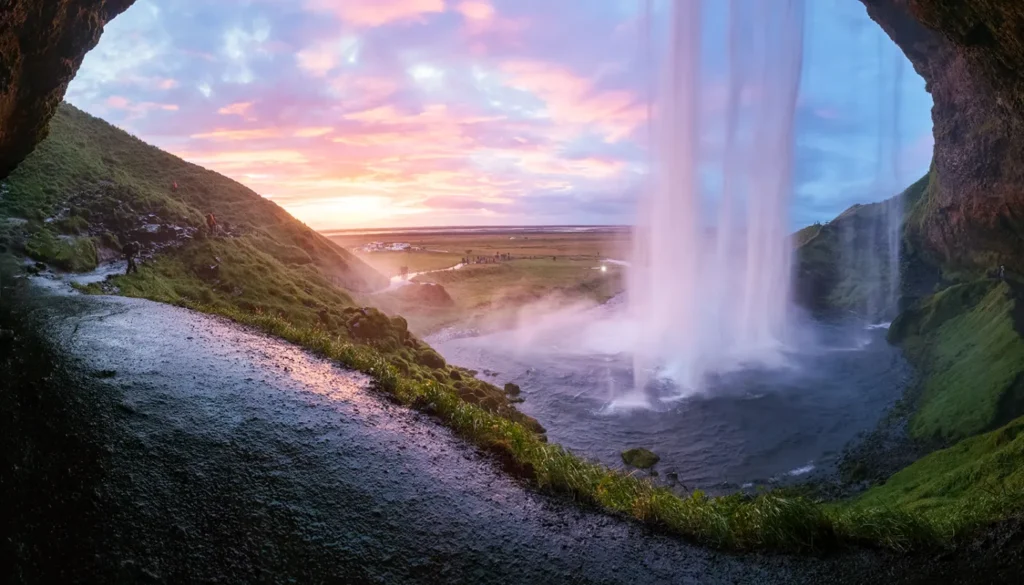
Summer is when Iceland opens up fully. The Ring Road loops you past glaciers, black-sand beaches and thundering waterfalls, and the Westfjords and Snæfellsnes are yours to discover too. Campsites are open all around the island, and guided tours take you into the highlands to colourful mountains and steaming hot springs.
Planning a full lap? Our Ring Road with a camper van in Iceland route shows how to split the island into easy driving days.
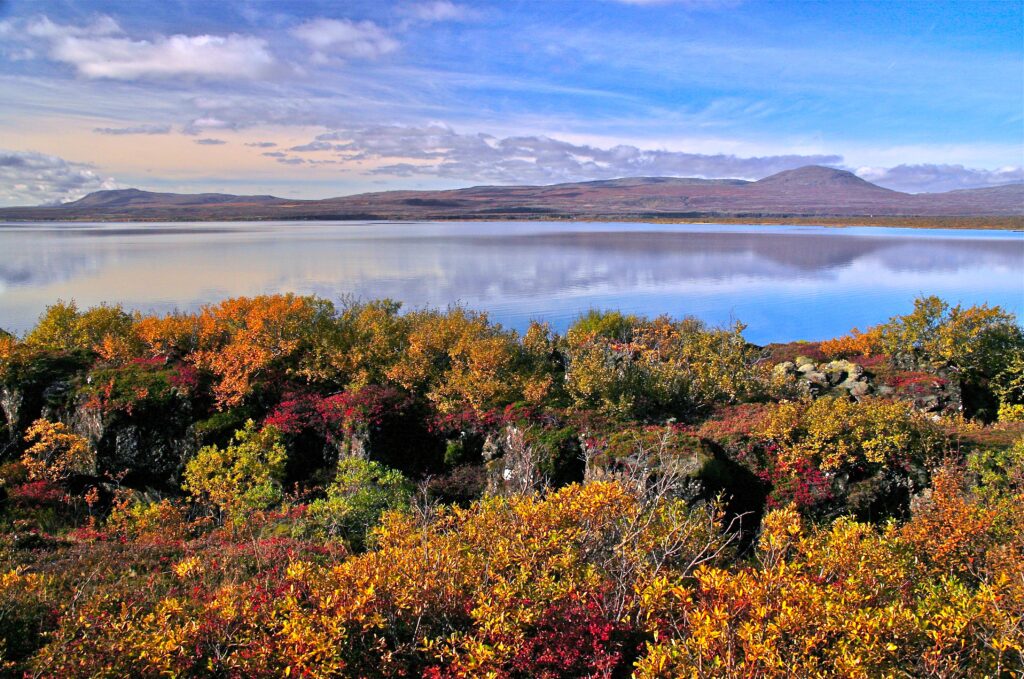
Autumn (September–October): Autumn Colours and the First Northern Lights
September is many travellers' secret answer to the best time to visit Iceland. The nights are dark enough for the northern lights again, yet the days are still long enough to drive comfortably and see everything.
The summer crowds thin out after the school holidays end. You'll share Seljalandsfoss and Skógafoss with far fewer people, and the moss fields and low birch woods turn red and gold. Prices drop into shoulder season, which makes autumn one of the best-value months for a premium motorhome.
A few things change, though:
- The highlands close as the first snow arrives, usually during September.
- Some campsites close from mid-September. Plan each night's stop in advance and choose sites marked as open in autumn.
- The weather turns faster. Expect autumn storms and check the wind forecast before driving the south coast.
What this looks like in reality: a full day of sightseeing in daylight, then dinner in the motorhome and an evening watching the sky from a dark campsite. That's the autumn combination you won't get in July. Read more about chasing the lights in our northern lights travel tips.

Winter (November–March): northern lights and ice caves
Winter is the best time to visit Iceland if the aurora is your main reason to go. Long, starry nights give you the best chances to see green and violet ribbons dancing across the sky. By day, frozen waterfalls, snow-covered lava fields and glowing blue ice turn the island into a completely different world.
- Northern lights: visible on clear nights from around September to April, with the longest dark hours from November to February.
- Ice caves: the natural blue ice caves under Vatnajökull are generally safe to enter only in the coldest months, roughly November to March, and always with a certified guide.
- Hot springs: a warm geothermal pool feels best when there's snow on the ground. The Blue Lagoon is less than half an hour from our Keflavik station.
Winter driving needs respect. Daylight drops to about four to five hours around Christmas, and storms can close roads at short notice. Keep daily distances short, stay close to the south coast and Golden Circle, and check road.is and safetravel.is every morning.
Ready to swap summer crowds for snowy silence? Our winter guide to off-season motorhome travel shows how to stay warm, cosy and confident on the road when the frost sets in.
Spring (April–May): roaring waterfalls, puffins and deals
Spring is Iceland's most underrated season. The days stretch fast, from about 13 hours of light in early April to almost 19 by late May, and the island wakes up around you.
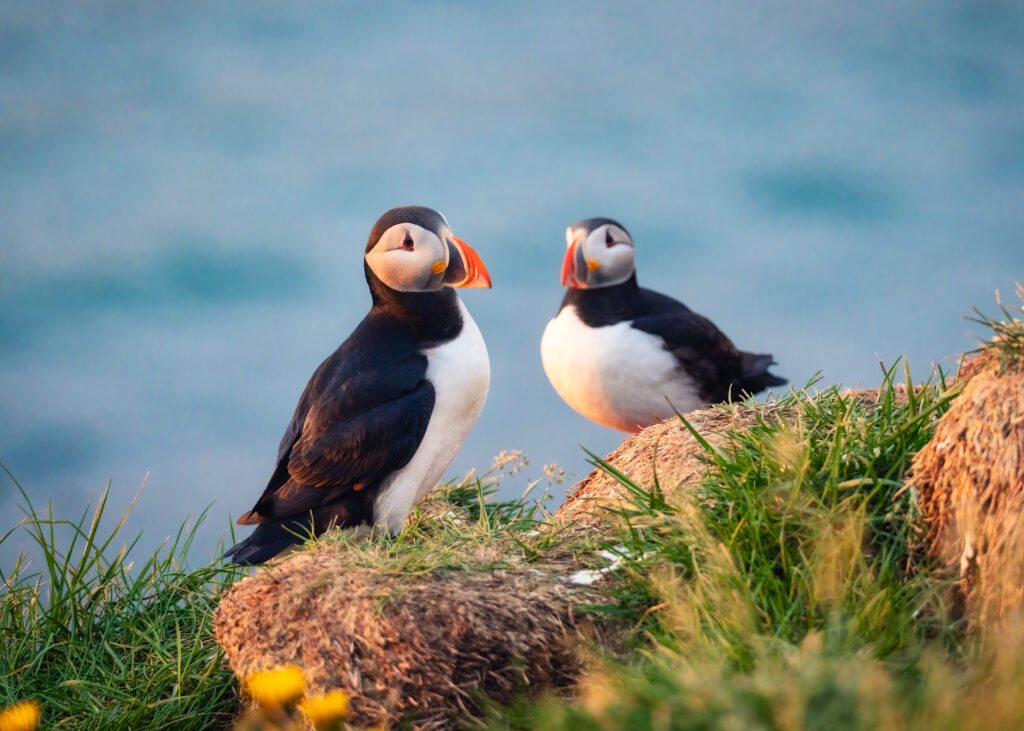
Meltwater turns the waterfalls loud and powerful. Puffins return to the cliffs from late April, and lambs appear in the fields along the Ring Road. Main roads are open, while the highlands stay closed until summer.
Spring is also a smart season for your budget. You get shoulder-season prices with summer-like light, and roads are quieter than in July. Campsites reopen gradually through May, so check opening dates for the nights you plan.
The trade-off is changeable weather, with sun, rain and wind all in one day. In a motorhome, that's easy: put the kettle on and enjoy the view until the shower passes.
So when is the best time to visit Iceland for you?
The best time to visit Iceland is the season that matches your must-see list. Use this as a quick guide:
| If you want… | Go in… |
| Midnight sun and the longest days | Mid-June to mid-July |
| A first Ring Road trip with the most settled weather | June to August |
| A family trip during school holidays | July to early August (book well ahead) |
| Northern lights and comfortable driving days | September to early October |
| Blue ice caves and snowy landscapes | November to March |
| Puffins without peak-season crowds | Late May or early June |
| Long daylight at better value | May or September |
First motorhome trip? Iceland is a good place to start. You only need a standard B driving licence, and you'll get a thorough introduction at pick-up. Our tips for your first motorhome holiday and tips before you go to Iceland cover the rest. Not sure which vehicle fits your group? Compare our motorhome categories.